

Why Kenya is Attracting Global Investors in Real Estate Development
Why Kenya is Attracting Global Investors in Real Estate Development
Kenya, a vibrant and competitive economy in East Africa, has increasingly become a hotspot for global investors in real estate development. The country’s strategic location, expanding middle class, infrastructure developments, and government incentives have all contributed to its appeal. In recent years, focusing on 2017 to 2025 after the government introduced the agenda of affordable housing projects https://big4.delivery.go.ke/Kenya’s real estate sector has experienced unprecedented growth, attracting foreign and local investors alike.
Table of Contents
- Strategic Location and Economic Hub of East Africa.
- Growing Middle Class and Urbanization.
- Government Incentives and Policy Support.
- Infrastructure Development Driving Growth.
- Rise of Mixed-Use Developments and Commercial Spaces.
- Boom in Hospitality and Tourism Sector.
- Stable and Favorable Investment Climate.
- Foreign Direct Investment (FDI) and Diaspora Remittances.
- Emerging Trends in Real Estate Investment.
Strategic Location and Economic Hub of East Africa
Kenya serves as a regional hub for East and Central Africa, making it a prime location for investment. Nairobi, the capital, is home to multinational corporations, international organizations, and regional headquarters for global businesses. Its connectivity to major markets, including Europe, the Middle East, and Asia, makes it an attractive destination for real estate development, from commercial properties to residential housing.

Kenya has well-developed transport and communication networks which has been manifested in the recent developments both in urban and rural areas. With Jomo Kenyatta International Airport serving as a major gateway for international business travellershttps://www.worldbank.org/en/news/feature/2018/09/25/kenyas-modernized-aviation-sector-set-to-boost-regional-trade-tourism. The presence of the Standard Gauge Railway (SGR) further enhances connectivity, reducing transport costs and boosting real estate development in areas along the railway line.
Growing Middle Class and Urbanization
Kenya’s growing middle class is fueling demand for quality housing and commercial spaces. According to the World Bank, urbanization in Kenya is occurring at an annual rate of approximately 4.3%, increasing the demand for housing, office spaces, and retail developments. https://documents1.worldbank.org/curated/en/099042523081079848/pdf/P1767250ae648b080a8370a996616645f6.pdf Cities such as Nairobi, Mombasa, Kisumu, and Eldoret are experiencing a real estate boom as urban populations expand.
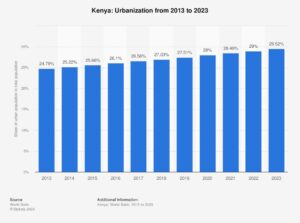
The rising disposable income among Kenyans has led to increased demand for modern housing, gated communities, and high-end apartments, creating lucrative opportunities for developers. International investors such as Chinas and Dubai are capitalizing on this trend by financing large-scale residential projects targeting both middle- and high-income buyers.
Government Incentives and Policy Support
The Kenyan government has implemented several policies and incentives to attract foreign investment in the real estate sector. Some key initiatives include:
- Public-Private Partnerships (PPPs): The government has encouraged collaboration with private investors to bridge the housing deficit.
- Affordable Housing Program: As part of the Big Four Agenda, the Kenyan government aims to build 500,000 affordable housing units by 2027, creating numerous investment opportunities.
- Tax Incentives: The government offers tax reliefs and incentives to foreign investors in real estate, including exemptions from capital gains tax in specific real estate projects.
- Land Reforms: Efforts to streamline land ownership processes and digitalize land records have improved transparency and investor confidence.
These policies make it easier for foreign developers to invest in large-scale housing projects, commercial properties, and mixed-use developments.
Infrastructure Development Driving Growth
Massive infrastructure projects have significantly influenced real estate growth in Kenya. Some notable developments include:
- The Nairobi Expressway: This modern highway has improved traffic flow, making areas along its route attractive for residential and commercial developments.
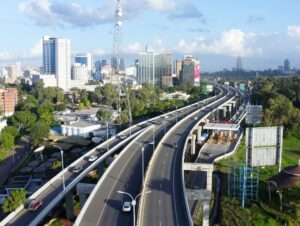
- Lamu Port-South Sudan-Ethiopia Transport (LAPSSET) Corridor: The project is expected to open up new real estate markets in previously underserved regions.
- Expansion of Road Networks: Roads linking Nairobi to satellite towns such as Kitengela, Thika, and Ngong have enhanced accessibility, fueling real estate development.
- Smart Cities and Special Economic Zones (SEZs): Konza Technopolis, a futuristic smart city, is attracting investors in real estate, technology, and commercial properties.
- Energy and Electricity connectivity: With the current trends of the Kenyan government to provide access to electricity and energy to each household across the country, this has made many rural and urban areas provide potentials to development due to security improvement.
With ongoing and upcoming infrastructure projects, more areas are becoming prime investment destinations, offering significant returns for global investors.
Rise of Mixed-Use Developments and Commercial Spaces
Kenya is witnessing a surge in mixed-use developments, which integrate residential, office, and retail spaces within a single complex. Notable examples include:
- Two Rivers Development
- Garden City
- The Hub Karen
- Tatu City
- Vipingo Development in Kilifi
These projects are drawing international investors due to their high demand among Kenya’s urban population. The increasing need for office spaces, shopping malls, and entertainment centres further solidifies Kenya’s position as an attractive real estate investment destination.
Boom in Hospitality and Tourism Sector
Before and after the Covid19 pandemic which affected many countries in hospitality and tourism sector, Kenya’s thriving tourism industry has also contributed to real estate growth, with increased investment in hotels, resorts, and Airbnb-style accommodations. Coastal cities like Mombasa, Malindi, and Diani are attracting foreign investors looking to develop luxury resorts and vacation homes.https://wttc.org/news-article/travel-and-tourism-in-kenya-injected-kes-1tn-to-the-national-economy-last-year

Nairobi, as an international business and travel hub, has seen a rise in high-end hotels and serviced apartments targeting expatriates and business travellers. The demand for rental properties in these sectors continues to drive real estate investments.
Stable and Favorable Investment Climate
Kenya has made significant strides in improving its investment climate through:
- Political Stability: Despite occasional political tensions, Kenya remains one of the most stable economies in Africa.
- Ease of Doing Business: The country has made notable improvements in the World Bank’s Ease of Doing Business ranking, making it attractive for foreign investors.
- Stable Currency and Financial Markets: The Central Bank of Kenya ensures financial stability, allowing investors to operate with minimal risks. With the Kenyan shilling stabilizing the US Dollar, this had made many investors put more investments.
International investors appreciate these favourable conditions, making Kenya a preferred destination for real estate development.
Foreign Direct Investment (FDI) and Diaspora Remittances
Foreign direct investment in Kenya’s real estate sector has grown steadily. International developers and institutional investors are injecting billions into residential, commercial, and industrial properties.
Diaspora remittances also play a crucial role in driving real estate investments. Kenyans living abroad are investing in property development, fuelling demand for high-quality housing and commercial spaces.
Emerging Trends in Real Estate Investment
Kenya’s real estate sector is evolving, with several emerging trends attracting global investors:
- Green and Sustainable Buildings: There is growing demand for eco-friendly developments with energy-efficient designs.
- Co-Living and Co-Working Spaces: The rise of digital nomads and freelancers has increased demand for flexible living and working spaces.
- Build-to-Rent Model: Developers are shifting to rental housing projects targeting young professionals and expatriates.
These trends create new investment opportunities, making Kenya a dynamic real estate market for global investors.
Conclusion
Kenya’s real estate sector presents immense opportunities for global investors. The combination of rapid urbanization, economic growth, infrastructure development, and government incentives has positioned the country as an attractive investment destination. With ongoing projects and emerging market trends, Kenya’s real estate industry is set to expand further, offering lucrative returns for both local and international investors. Whether in residential housing, commercial properties, or mixed-use developments, Kenya remains a promising frontier for real estate investment in Africa.